Veliko Tarnovo is a city in central northern Bulgaria. It is located on the Yantra River and is famous as the historical capital of the Second Bulgarian Empire, attracting many tourists with its unique architecture. Prehistory and Antiquity Veliko Tarnovo is one of the oldest settlements in Bulgaria, having a history of more than 5 millennia. Middle Ages The historical part of town, lies on three hills. It is the place where brothers Asen and Peter declared the end of Byzantine rule in Bulgaria, proclaiming the city a capital. Veliko Tarnovo grew quickly to become the strongest Bulgarian fortification of the Middle Ages between the 12th and 14th century and the most important political, economic, cultural and religious centre of the empire. In the 14th century as the Byzantine Empire weakened Tarnovo claimed to be the Third Rome based on its preeminent cultural influence in the Balkans and the Slavic Orthodox world. Ottoman rule The city flourished and grew for 200 years until falling to the Ottoman Empire on 17 July 1393 after a three-month siege. Veliko Tarnovo, known in the Middle Ages as Tarnovgrad was the location of two uprisings against Ottoman rule, in 1598 (the First Tarnovo Uprising) and 1686 (the Second Tarnovo Uprising), both of which failed to liberate Bulgaria. Tarnovgrad, along with the rest of present-day Bulgaria, remained under Ottoman rule until the 19th century, when national identity and culture reasserted themselves as a strengthening resistance movement. The idea of the establishment of an independent Bulgarian church and nation motivated the 1875 and 1876 uprisings in town. On 23 April 1876, the April Uprising marked the beginning of the end of the Ottoman occupation. It was soon followed by the Russo-Turkish War (1877 / 1878). Liberated Bulgaria On 7 July 1877, Russian general Joseph Vladimirovich Gourko liberated Veliko Tarnovo, ending the 480-year-rule of the Ottoman Empire. In 1878, the Treaty of Berlin created a Principality of Bulgaria between the Danube and the Stara Planina range, with its seat at the old Bulgarian capital of Veliko Tarnovo. On 17 April 1879, the first National Assembly convened in Veliko Turnovo to ratify the state's first constitution, known as the Tarnovo Constitution, the key result of which resulted in the transfer of Parliament from Tarnovgrad to Sofia, which today remains the Bulgarian capital. In deference to the city's past, Tsar Ferdinand Saxe-Coburg Gotha chose the St Forty Martyrs Church in Veliko Tarnovo as the place to declare the complete independence of Bulgaria on October 5, 1908. Places of interest One of Bulgaria's primary tourist destinations, Veliko Tarnovo boasts many historical monuments and landmarks, such as the ruins of the castle Tsarevets on the hill of the same name, which housed the royal and patriarchal palace, and Trapezitsa, the second fortress of the inner city on the right bank of Yantra. Other attractions are the St Demetrius of Thessaloniki Church, St Forty Martyrs Church, the numerous Bulgarian National Revival buildings with their typical architecture, the many museums on various topics.
Sound and Light audio-visual show is an unique attraction. (more info and a video clip - on the right side of the page )
GALLERY of the town
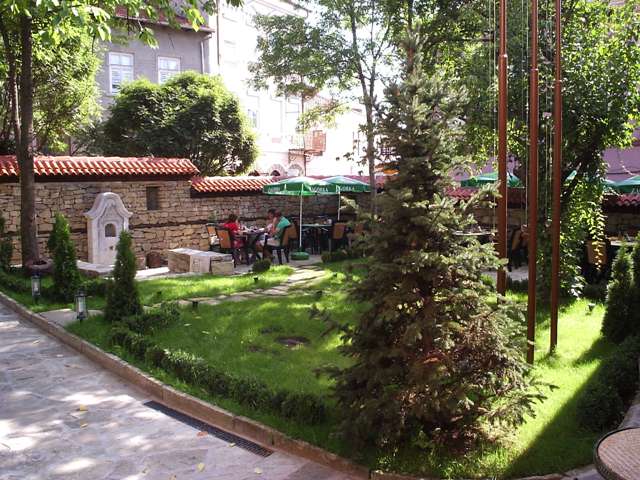
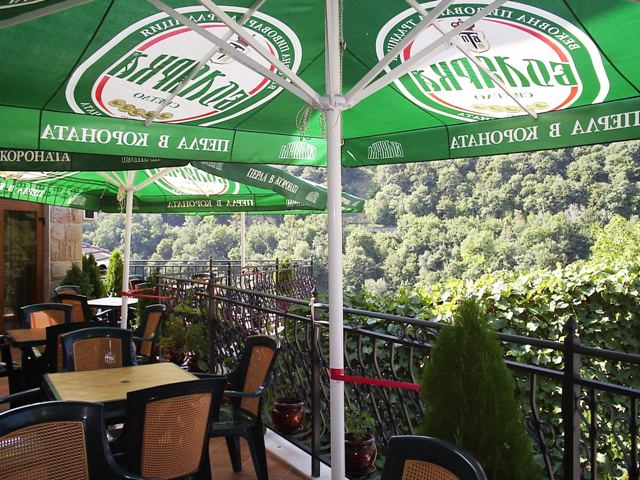
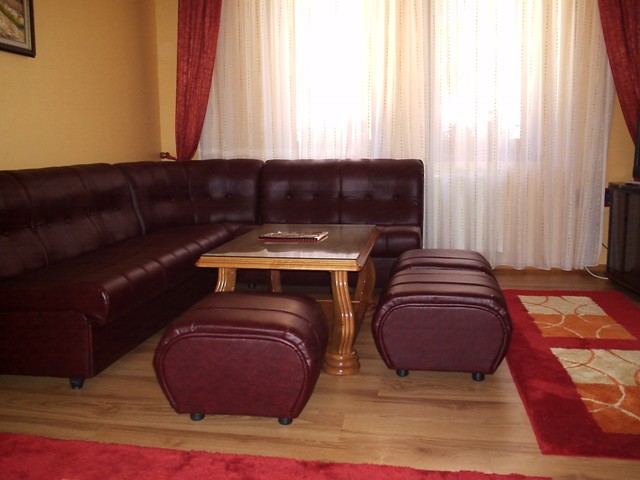
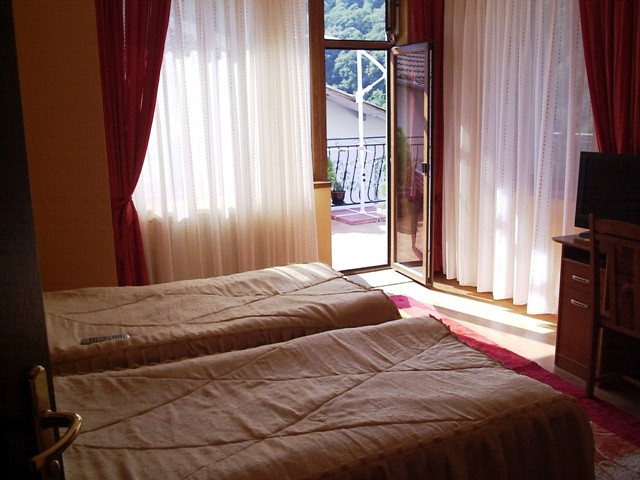
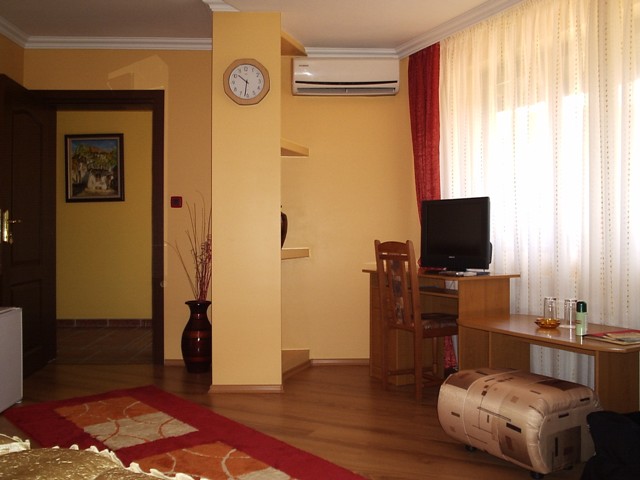
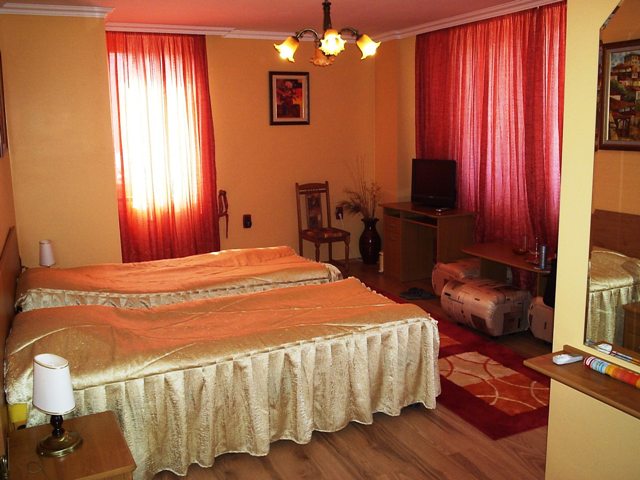
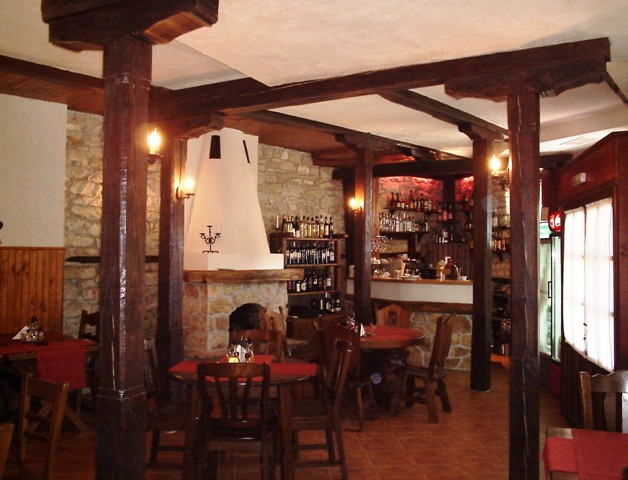
We recommended a hotel situated in the old town and overlooking the picturesque valley. You will admire the nice modern design of the rooms and next to it - the outdoor restaurant and wine cellar in the typical Bulgarian style.
photogallery
For a short break or a relaxing holiday we highly recommend the club CHIFLIKA. Situated in the picturesque village of Ledenik, in close vicinity to the old capital Veliko Turnovo, or just two kilometers' drive eastwards on the highway to Sofia, complex Chiflika offers holidaymakers the comfort and coziness which they need. Relax in the spacious summer garden, exquisitely decorated with ancient pottery and beautiful pieces of art, or by the swimming pool with crystal-clear water, amid verdure and streamlets. The hospitable hosts have also thought about the smallest guests – there is a pool for them too. Complex Chiflika offers its business guests a hall with a capacity of 35 seats, equipped with a fireplace and suitable for business meeting and seminars. Complex Chiflika offers a summer terrace, a 170-seat tavern, suitable for holding seminars, weddings, baptisms etc. The hotel consists of 2 triple rooms, one of which with a fireplace, 4 double rooms, 1 apartment and a separate guest house. For your convenience complex Chiflika provides security and room service. The complex offers accommodation for large tourist groups in partner hotels. There is also a parking lot for 60 cars and covered parking for guests of the hotel. Our chefs will welcome you with a rich menu of traditional Bulgarian dishes, char-grilled, as well as our clay oven specialties - St. George lamb and roasted pork. Live orchestra and pop-folk stars will keep up your spirits.
see a photogallery of that small paradise :)
For contacts:
00356-21374357 Mob.: 00356-99 445026 ; 00356-99 243883



 SKYPE: emil_malta